Closet, Wardrobe, Cabinet: Understanding the Difference for Your Bedroom
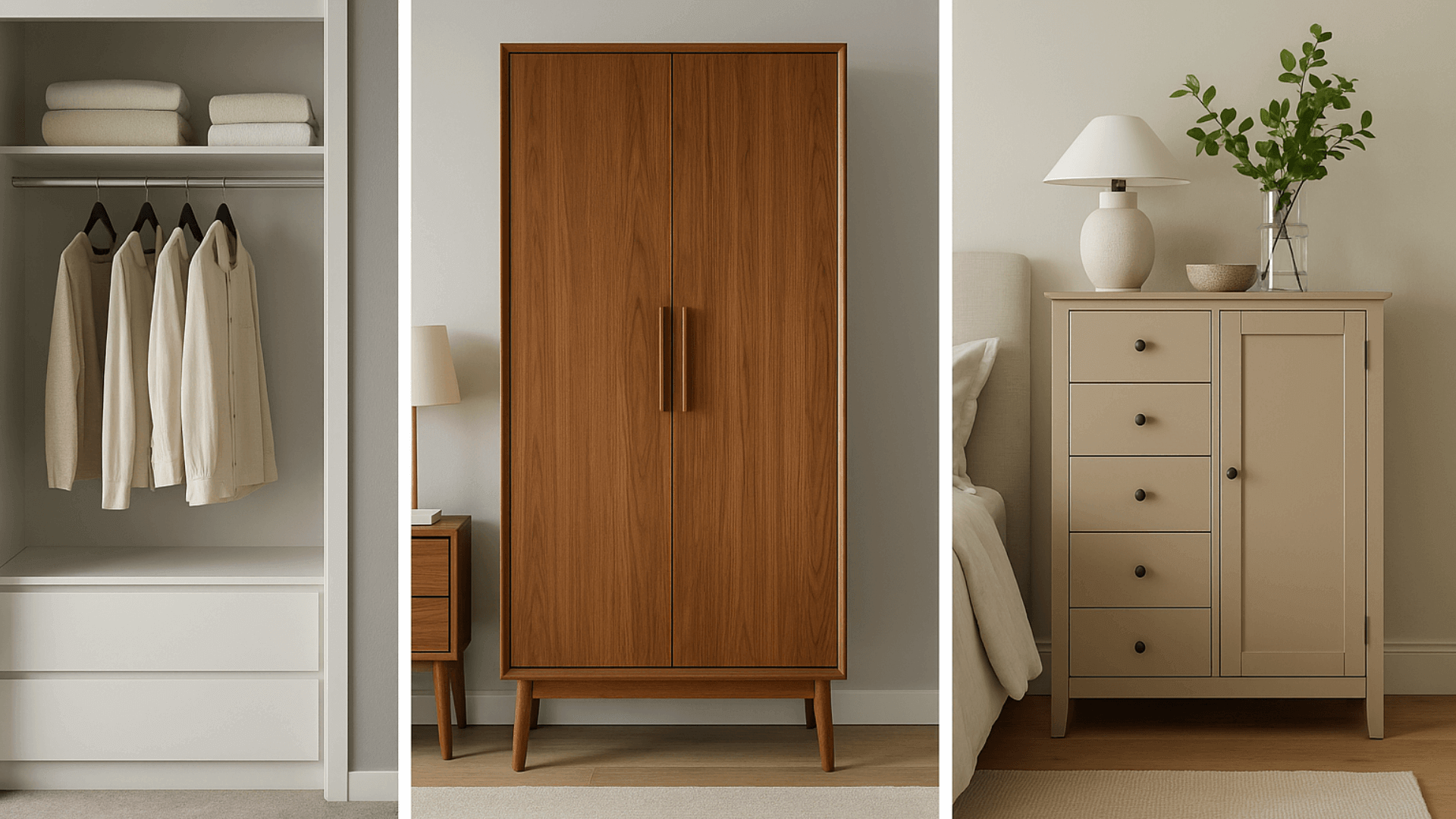
A closet is built into the room, a wardrobe is freestanding furniture for clothing, and a cabinet is general-purpose storage with shelves or compartments.
When designing or furnishing your bedroom, one of the biggest considerations is how to store your clothes, accessories, and personal belongings. Yet many homeowners get confused with terms like bedroom wardrobe, bedroom cabinet, and bedroom closet. While they are all used for storage, each has unique features, purposes, and cultural associations.
In this guide, we’ll break down the differences between closets, wardrobes, and cabinets, so you can better understand which option suits your bedroom and lifestyle.
Key Takeaways
When planning bedroom storage, it’s important to understand the differences between a closet, wardrobe and cabinet. A closet is built into the room, a wardrobe is freestanding furniture for clothing, and a cabinet is general-purpose storage with shelves or compartments.
Bedroom Wardrobe vs Closet vs Cabinet: Why the Difference Matters
You may wonder: does it really matter whether I call it a wardrobe, closet, or cabinet? The answer is yes—especially when it comes to design, functionality, and planning your bedroom layout.
- A closet often refers to a built-in space within the walls of a room.
- A wardrobe is usually a freestanding piece of furniture for storing clothes.
- A cabinet is a broader category, often referring to enclosed storage furniture with shelves or compartments.
Knowing these distinctions ensures you choose the right storage solution that not only looks good but also makes your bedroom more functional.
What is a Bedroom Closet?
A closet is typically a built-in storage space within the walls of a bedroom. In many Western homes, closets are a standard feature and can range from small reach-in spaces to large walk-in closets.
Features of a Closet:
- Built-in design: Part of the room’s architecture.
- Doors or sliding panels: To conceal the storage space.
- Variety of layouts: Can be walk-in, reach-in, or custom-built.
- Personalization: Shelves, hanging rods, and drawers can be added for better organization.
Closets are convenient because they save floor space and integrate seamlessly into the bedroom layout. However, in Malaysia and other parts of Asia, closets are less common compared to wardrobes.
What is a Bedroom Wardrobe?
A wardrobe is a freestanding piece of furniture, often taller and larger than a typical cabinet, designed specifically for clothing storage. It is widely used in Malaysia, Europe, and many Asian countries.
Features of a Wardrobe:
- Freestanding design: Can be moved around or replaced easily.
- Clothing-focused storage: Usually includes hanging space, shelves, and sometimes drawers.
- Variety of styles: From modern wardrobes design to traditional wooden designs.
- Custom options: Built-in wardrobes can also be designed to fit into specific bedroom layouts.
Wardrobes are often chosen because of their flexibility—they don’t require structural changes to the room and can be updated as styles or needs change.
What is a Bedroom Cabinet?
The term cabinet is broader and can refer to many types of storage furniture. In the bedroom, a cabinet often serves as additional storage for items that don’t fit into wardrobes or closets.
Features of a Bedroom Cabinet:
- Multi-purpose storage: Not just for clothes but also for books, accessories, or personal belongings.
- Variety of sizes: Can be tall or short, depending on function.
- Closed compartments: Equipped with shelves, doors, or drawers.
- Versatility: Bedroom cabinets often complement wardrobes or closets rather than replace them.
In many cases, a bedroom cabinet might serve as a dresser, a side storage unit, or even a bedside cabinet for essentials.
Key Differences Between Bedroom Closet, Wardrobe, and Cabinet
Here’s a closer comparison of the three:
| Aspect | Bedroom Closet | Bedroom Wardrobe | Bedroom Cabinet |
| Design & Placement | Built into the wall, permanent; often designed as full-height for maximum use | Freestanding or fitted wardrobes that can be customised to ceiling height | Flexible placement, often supplementary |
| Purpose | Dedicated to clothing and accessories | Primarily for clothing, with hanging rails, shelves, and drawers | General storage for various household items |
| Flexibility | Requires renovation for changes | Easy to swap, upgrade, or replace; fitted wardrobes offer semi-permanent elegance | Adaptable for multiple uses |
| Space Consideration | Saves floor space but needs built-in design | Can be compact sliding door units or large full-height wardrobes for luxury homes | Usually smaller; fits into leftover bedroom space |
Bedroom Closet – Closets are permanent and often designed as full-height storage, making the most of vertical space. They’re efficient but require renovation if you want changes.
Bedroom Wardrobe – Wardrobes can be freestanding or fitted wardrobes built seamlessly into your room. They range from compact sliding door designs to full-height wardrobes in luxury homes, offering both flexibility and style.
Bedroom Cabinet – Cabinets remain versatile, often used for items beyond clothing. They’re best as complementary storage but may clutter the room if oversized.
Which One Should You Choose for Your Bedroom?
When choosing between a bedroom wardrobe closet or a cabinet, ask yourself the following:
1. Do you have built-in space available?
If yes, a closet may be the most seamless solution. It keeps the room tidy and maximizes wall space.
2. Do you prefer flexibility and style options?
A wardrobe is ideal if you want furniture that you can change over time or match with your bedroom décor.
3. Do you need extra storage beyond clothing?
A cabinet works well as an addition for items like books, bedding, or electronics.
Pros and Cons at a Glance
| Storage Type | Pros | Cons |
| Bedroom Closet | Saves floor space; customizable with shelves and rods | Requires construction work; less common in Malaysian homes |
| Bedroom Wardrobe | Freestanding and flexible; wide variety of designs and finishes | Takes up floor space; may not feel as integrated as closets |
| Bedroom Cabinet | Multi-purpose storage; complements other furniture | Not ideal for large clothing collections; can look cluttered if oversized |
Bedroom Closet
Closets are excellent for saving floor space since they’re built into the room’s structure. They can be customized with shelves, rods, and drawers, making them highly functional. However, they require construction work and are less common in Malaysian homes, where freestanding wardrobes are more practical.
Bedroom Wardrobe
Wardrobes are flexible because they’re freestanding and can be moved or replaced easily. They also come in many designs, finishes, and sizes to match bedroom décor. The trade-off is that they take up floor space and might not integrate as seamlessly into the room as a built-in closet.
Bedroom Cabinet
Cabinets are versatile pieces that can be used for clothing, books, or personal items. They often complement wardrobes or closets as supplementary storage. Still, they’re not ideal for storing large wardrobes of clothes and may make the bedroom feel cluttered if oversized.
Modern Wardrobes for Bedrooms: Trends in Malaysia
In Malaysia, modern wardrobes for bedrooms remain a practical and highly sought-after solution, particularly as many landed homes and condominiums are delivered without built-in closets. This has positioned wardrobes as both a functional necessity and a key design element within contemporary bedroom interiors.
Today’s designs prioritise flexibility, space efficiency, and aesthetics. Sliding door wardrobes are especially popular in compact bedrooms, offering a clean, streamlined look while maximising usable floor space. For larger residences, walk-in wardrobes represent a luxury upgrade, combining organised storage with a boutique-style dressing experience.
For homeowners seeking a refined finish, luxury wardrobe design emphasises premium materials, bespoke internal configurations, soft-close systems, and integrated lighting. These elements not only improve daily usability but also contribute to a cohesive, modern bedroom ambience.
Bedroom cabinets continue to play a supporting role, particularly in apartments where additional storage is essential. When coordinated with the main wardrobe design, they enhance visual consistency while optimising every available inch of space.
Although Western-style built-in closets are still less common, they are gaining traction in high-end Malaysian homes. Custom interior designers are increasingly integrating these sleek, built-in solutions to meet the demand for minimalist, contemporary bedrooms with a seamless architectural finish.
Final Thoughts
Understanding the differences between a bedroom wardrobe, bedroom cabinet, and bedroom closet can help you make smarter decisions for your bedroom design.
- Go for a closet if you want built-in, space-saving storage.
- Choose a wardrobe if you want flexibility and style variety.
- Add a cabinet if you need extra, multipurpose storage.
By selecting the right wardrobe storage solution, you can keep your bedroom organized, stylish, and perfectly suited to your lifestyle.
Explore our blogs to understand how modern kitchen cabinet design trends shape contemporary spaces, from clean-lined layouts to refined materials, with a practical luxury kitchen cabinets guide that highlights craftsmanship, functionality, and premium brands such as Poggenpohl kitchen cabinet.
