Modern Kitchen Cabinets: 9 Design Trends for Malaysian Homes in 2026
Key Takeaways
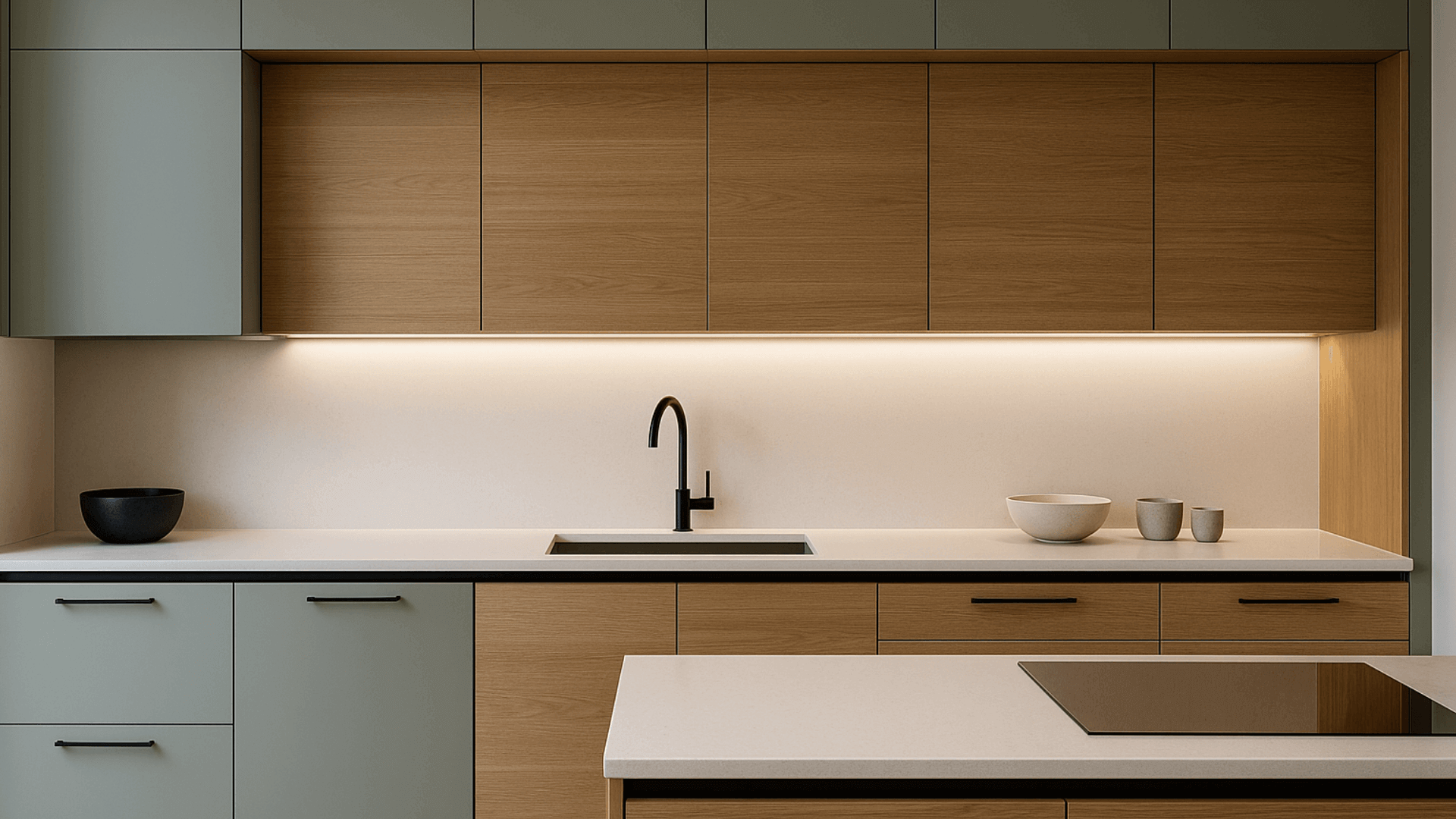
Modern kitchen cabinets in 2026 combine clean architectural lines with warm materials, practical storage and integrated technology. Popular design directions include natural wood finishes, handleless doors, earthy colours, full-height cabinetry and concealed appliances. For Malaysian homes, choosing suitable cabinet materials, functional layouts and moisture-resistant specifications is just as important as selecting an attractive design.
Modern kitchen cabinets have evolved beyond simple storage units. Today, they help define the kitchen’s overall appearance, influence how comfortably the space functions and create a visual connection with surrounding living areas.
From warm wood textures and minimalist cabinetry to integrated lighting and concealed storage, modern kitchen cabinet design increasingly balances aesthetics with practicality. Homeowners are also exploring more personalised colours, tactile finishes and configurations that accommodate changing lifestyles.
In Malaysia, kitchen design must consider additional factors such as humid conditions, frequent cooking and the differences between wet and dry kitchens. These practical requirements can influence the most suitable materials, hardware and cabinet configurations.
Whether you are furnishing a compact condominium or designing a spacious landed home, understanding the latest cabinetry trends can help you make informed decisions.
For broader inspiration, explore how modern luxury kitchen designs in Malaysia combine cabinetry, appliances and spatial planning to create cohesive contemporary interiors.
What Defines Modern Kitchen Cabinets?
Modern kitchen cabinets are characterised by clean lines, simplified door profiles, practical storage and finishes that complement contemporary interiors. Common features include flat-panel doors, integrated handles, streamlined surfaces and modular storage configurations.
Unlike traditional cabinets, which may feature decorative mouldings and elaborate detailing, modern cabinetry generally favours restrained shapes and a consistent material palette.
However, modern kitchen cabinets do not have to be plain or entirely handleless. Wood textures, contrasting finishes, discreet hardware and carefully selected colours can add personality without compromising the overall design.
For homeowners comparing design approaches, understanding the differences between European and American kitchen cabinet styles can help clarify which aesthetic and functional features best suit their preferences.
1. Warm Wood Kitchen Cabinets for Natural Elegance
Natural wood finishes continue to influence contemporary kitchen design, introducing warmth and texture into spaces traditionally associated with glossy or neutral surfaces.
Walnut, oak and wood-effect finishes are particularly versatile because they can complement stone worktops, metal detailing and understated colour palettes.
In modern kitchens, wood cabinetry can be used across an entire wall or combined with contrasting materials. For example, walnut base cabinets paired with warm beige upper cabinets create visual balance without overwhelming the space.
Light oak finishes can also work well in smaller kitchens, where a softer palette helps maintain an open and welcoming appearance.
Homeowners should distinguish between solid wood, natural veneers and wood-effect laminates, as each offers different maintenance requirements and material characteristics.
For Malaysian homes, the quality of the cabinet substrate, surface finishing and edge sealing is especially important where humidity and moisture exposure are concerns.
Best suited for: Open-plan kitchens, warm minimalist interiors and homeowners seeking a contemporary appearance with natural textures.
2. Textured and Fluted Kitchen Cabinet Finishes
Modern kitchen cabinets are increasingly incorporating tactile finishes to create subtle depth and visual interest.
Rather than relying entirely on smooth cabinet doors, homeowners can introduce textured veneers, fluted panels, reeded details or embossed laminates.
These finishes add character while preserving the simple shapes associated with modern cabinetry.
Fluted wood panels, for example, can become an attractive feature on a kitchen island or selected cabinet doors. Textured laminates provide another way to introduce material variation without using natural timber throughout the kitchen.
However, deeply grooved surfaces may require more careful cleaning, especially in areas exposed to cooking grease and splashes.
For this reason, textured finishes can be particularly effective in dry kitchens or on decorative cabinet sections, while smoother surfaces may be easier to maintain near cooking zones.
Best suited for: Luxury dry kitchens, feature islands and contemporary interiors that benefit from additional texture.
3. Handleless Modern Kitchen Cabinets for a Seamless Look
Handleless cabinetry remains an established choice for homeowners who prefer a clean, minimalist kitchen.
By reducing visible hardware, handleless kitchen cabinets create uninterrupted surfaces that can make cabinetry appear more integrated with surrounding walls.
Several opening mechanisms are available.
Push-to-open doors use a mechanical or assisted opening system that allows compatible cabinet fronts to open when pressed.
Integrated J-pull handles incorporate a shaped gripping edge into the cabinet front, removing the need for a separate external handle.
Recessed channel systems provide a discreet gripping space between cabinet fronts, maintaining a streamlined appearance.
Each option has practical considerations. Push-to-open fronts may show fingerprints more readily, while recessed channels require suitable cleaning and maintenance.
Homeowners should assess everyday usability, particularly when opening drawers or cabinets while cooking.
Handleless designs are strongly associated with premium European kitchen systems. For example, Poggenpohl kitchen collections demonstrate how cabinetry proportions, clean surfaces and integrated details can create a coordinated architectural appearance.
Best suited for: Minimalist kitchens, contemporary condominiums and open-plan living spaces.
4. Earthy Colours and Two-Tone Kitchen Cabinets
While white remains a versatile cabinet colour, modern kitchens are also embracing warmer and more expressive palettes.
Beige, taupe, olive green, sage, muted brown and natural wood tones can create a comfortable atmosphere without sacrificing contemporary styling.
These colours pair particularly well with stone surfaces, warm lighting and metallic accents.
Two-tone kitchen cabinets offer another way to introduce contrast.
A common approach is to use darker base cabinets with lighter upper cabinets. This creates a visually grounded lower section while keeping the upper part of the kitchen relatively light.
Alternatively, a kitchen island can feature a contrasting finish that distinguishes it from the surrounding cabinetry.
For example, pale oak cabinets with a deep walnut island can introduce depth while maintaining a consistent natural material palette.
Before selecting colours, homeowners should examine cabinet samples under the kitchen’s actual daylight and artificial lighting conditions. Colours can appear different depending on the surrounding finishes and light temperature.
For additional inspiration, explore luxury interior colour trends and how coordinated palettes can influence the overall atmosphere of modern homes.
Best suited for: Homeowners seeking a personalised kitchen with warmth, contrast and a cohesive design.
5. Concealed Storage and Integrated Appliances
One of the most practical developments in modern kitchen cabinet design is the focus on concealed storage.
In open-plan homes, the kitchen is often visible from dining and living areas. Cabinet systems that reduce visible clutter can therefore contribute to a calmer interior.
Popular storage options include pull-out pantry units, deep drawers, concealed waste bins and compartmentalised organisers.
Appliance garages can also provide dedicated spaces for smaller equipment such as coffee machines and blenders.
However, electrical appliances should only be operated inside enclosed cabinetry where the installation and appliance manufacturer’s instructions explicitly permit it, with appropriate ventilation and electrical provisions.
Integrated refrigerators and dishwashers offer another way to maintain a continuous cabinet appearance, where compatible appliance models and panel systems are used.
Concealed storage is most effective when planned around everyday routines rather than simply hiding as many items as possible.
For example, frequently used cookware should remain easily accessible, while occasionally used items can occupy less convenient compartments.
Best suited for: Open-concept kitchens, luxury condominiums and homeowners who prefer organised surfaces with minimal visual clutter.
6. Smart Kitchen Cabinets With Integrated Lighting
Technology can improve the functionality of modern kitchen cabinets without becoming a dominant visual feature.
Integrated LED lighting is among the most practical additions.
Under-cabinet lighting improves visibility across food preparation surfaces, while internal cabinet lighting makes deep storage compartments easier to use.
Some designs also incorporate motion sensors, illuminated drawers or compatible motor-assisted opening systems.
More advanced kitchen solutions may support integrated charging points and selected automated storage functions.
However, not every smart feature is necessary for every household.
Before investing in technology-enabled cabinetry, consider whether the feature improves everyday convenience and whether replacement parts and maintenance support will remain available.
Lighting design should also account for the location of power supplies, suitable protection from moisture and safe installation.
For homeowners interested in modern European kitchen innovation, Ernestomeda’s Italian luxury kitchen designs offer further inspiration on combining cabinetry, design and contemporary functionality.
Best suited for: Premium contemporary kitchens and homeowners who value convenience, integrated lighting and carefully selected technology.
7. Full-Height Modern Kitchen Cabinets for Efficient Storage
Full-height kitchen cabinets extend towards the ceiling, making use of vertical space that conventional cabinetry may leave unused.
This design is particularly useful in kitchens where floor space is limited but additional storage is required.
Tall cabinets can accommodate pantry supplies, cookware, small appliances and occasionally used household items.
They can also help create a streamlined appearance by reducing visual interruptions between the cabinetry and ceiling.
In larger kitchens, full-height cabinets may be used as part of an integrated wall incorporating ovens, refrigeration or concealed storage, subject to appliance specifications.
However, upper compartments are less accessible than lower storage areas. Frequently used items should therefore remain at practical heights.
Full-height cabinetry also requires careful consideration of ventilation, ceiling conditions and installation clearances.
Best suited for: Compact condominiums, kitchens with limited wall space and homeowners requiring additional enclosed storage.
8. Kitchen Island Cabinets as Functional Design Features
Kitchen islands can provide additional preparation space, storage and seating while becoming an important visual feature.
Modern kitchen island cabinets often incorporate deep drawers, concealed compartments and finishes that complement the surrounding kitchen.
A contrasting island design can introduce visual interest without requiring the entire kitchen to use multiple materials.
For example, a dark walnut island paired with lighter cabinetry creates a distinct focal point.
In larger kitchens, islands may also accommodate compatible cooking appliances or sinks, depending on the available services and intended workflow.
However, a kitchen island should never be included purely for appearance.
The design must provide sufficient circulation space for people to move comfortably, open cabinet doors and use appliances.
In smaller kitchens, a peninsula or alternative cabinet layout may offer greater practicality.
For more detailed inspiration, see kitchen island cabinet design ideas and functional benefits.
Best suited for: Medium-sized and spacious kitchens where an island can be incorporated without restricting movement.
9. Durable and Responsible Kitchen Cabinet Materials
Modern kitchen cabinet design increasingly considers long-term functionality alongside appearance.
For Malaysian homes, suitable material selection is especially important because cabinets may be exposed to humidity, occasional water splashes and regular cooking activities.
Common cabinetry materials include high-pressure laminates, lacquered engineered boards, wood veneers, plywood and selected compact laminate systems.
Each material has different properties.
High-pressure laminates offer a broad selection of colours and finishes, with performance depending on the product specification and underlying cabinet construction.
Lacquered finishes provide smooth, contemporary surfaces, although they may require careful maintenance to minimise visible scratches or chips.
Natural veneers create distinctive woodgrain patterns but should be appropriately finished and maintained.
Moisture-resistant engineered boards can provide additional protection against incidental moisture exposure, but they are not necessarily waterproof.
When evaluating cabinet materials, homeowners should consider surface durability, substrate quality, edge sealing, cleaning requirements and the intended kitchen environment.
Sustainability claims should also be supported by relevant product information or recognised material certifications rather than appearance alone.
For a deeper look at specifications and material choices, read The Plan’s luxury kitchen cabinet guide for Malaysia.
Best suited for: All kitchen types, particularly households that prioritise long-term maintenance and material performance.
Which Modern Kitchen Cabinet Design Is Best for Your Home?
The ideal cabinet design depends on the kitchen’s dimensions, cooking requirements, storage needs and preferred aesthetics.
| Cabinet Design | Main Advantage | Best Suited For | Practical Consideration |
|---|---|---|---|
| Warm wood cabinets | Creates a natural, inviting appearance | Open-plan kitchens | Finishing and moisture care |
| Textured cabinets | Adds visual depth | Luxury dry kitchens | Grooves may collect dust or grease |
| Handleless cabinets | Streamlined aesthetic | Minimalist kitchens | Opening mechanism maintenance |
| Two-tone cabinets | Creates colour contrast | Medium and large kitchens | Requires coordinated finishes |
| Concealed storage | Reduces visible clutter | Open-concept homes | Internal accessibility |
| Smart cabinets | Adds convenience | Premium kitchens | Maintenance and compatibility |
| Full-height cabinets | Increases vertical storage | Compact kitchens | Access to upper compartments |
| Island cabinets | Combines storage and preparation space | Larger kitchens | Requires adequate circulation space |
A successful modern kitchen combines the right design features rather than incorporating every available trend.
For example, a small condominium kitchen may benefit most from full-height cabinetry, light finishes and concealed storage. A spacious landed home may have room for a statement island, premium materials and more elaborate storage systems.
How to Choose Modern Kitchen Cabinets for Malaysian Homes
When selecting modern kitchen cabinets, it is important to evaluate how the design will perform in everyday use.
Consider Your Kitchen Layout
The available space determines which cabinet arrangements are practical.
An L-shaped layout can provide an efficient configuration for many homes, while galley kitchens often benefit from carefully planned parallel storage.
Larger kitchens may accommodate U-shaped configurations or islands.
Homeowners can explore different options in this guide to kitchen layouts for Malaysian homes.
Understand Wet and Dry Kitchen Requirements
Malaysian households may use separate wet and dry kitchens to accommodate different cooking activities.
Wet kitchens used for frequent frying, steaming and cleaning require particular attention to ventilation, easy-to-clean finishes and moisture management.
Dry kitchens may offer greater flexibility for decorative cabinetry, display shelving and more delicate finishes.
The material specification should match the intended use rather than relying on a single design approach throughout both spaces.
Prioritise Storage and Accessibility
Before finalising cabinet dimensions, consider what needs to be stored and how frequently each item is used.
Deep drawers may be convenient for cookware, while tall cabinets can accommodate pantry supplies and larger items.
Storage accessories should be selected based on functionality, ease of access and maintenance requirements.
Evaluate Materials and Hardware
Cabinet quality depends on more than the visible door finish.
Homeowners should also consider the cabinet substrate, hinges, drawer runners, edge sealing and installation quality.
These components influence how the cabinetry performs during everyday use.
Balance Design Trends With Longevity
Popular cabinet colours and finishes can provide inspiration, but permanent kitchen installations should also reflect long-term preferences.
A neutral base palette can provide flexibility, while more distinctive colours or textures can be introduced through selected cabinet sections and accessories.
Frequently Asked Questions About Modern Kitchen Cabinets
What are modern kitchen cabinets?
Modern kitchen cabinets are cabinetry systems designed around clean lines, simplified surfaces, functional storage and contemporary materials. They commonly feature flat-panel doors, integrated handles, neutral or natural finishes and efficient internal organisation.
What colours are popular for modern kitchen cabinets in 2026?
Warm white, beige, taupe, olive green, sage and natural wood tones are prominent contemporary design choices. Two-tone combinations, including darker base cabinets with lighter upper cabinets, also offer a practical way to introduce contrast.
Are handleless kitchen cabinets practical?
Handleless kitchen cabinets can be practical when the opening mechanism is appropriate for the household. Recessed grips and integrated handles provide a streamlined appearance, while push-to-open systems offer another option. Ease of cleaning, fingerprints and long-term hardware maintenance should be considered.
What kitchen cabinet materials are suitable for Malaysian homes?
Materials such as properly specified laminates, engineered boards, plywood and suitably finished wood veneers can be used in Malaysian homes. Suitability depends on moisture exposure, cabinet construction, installation quality and maintenance. Water damage should be addressed promptly regardless of the material selected.
Are matte or glossy kitchen cabinets better?
Matte cabinets provide a softer, understated appearance and may make some reflections less noticeable. Glossy surfaces reflect more light but can show fingerprints and smudges more readily, depending on the finish. The better choice depends on personal preference, cleaning habits and the kitchen’s lighting.
Are modern kitchen cabinets suitable for small kitchens?
Yes. Modern kitchen cabinets can be configured with full-height storage, integrated appliances, pull-out organisers and compact layouts. Light finishes and simplified door profiles can also help a smaller kitchen feel less visually crowded.
What is the difference between modern and contemporary kitchen cabinets?
Modern kitchen cabinets typically emphasise clean lines, minimal ornamentation and functional design principles. Contemporary kitchen cabinets reflect current styles and may incorporate a wider variety of colours, materials and technologies. The two styles often overlap in today’s residential interiors.
Explore Modern Kitchen Cabinet Solutions at The Plan
Modern kitchen cabinets should combine functional planning, quality materials and an aesthetic that complements the home.
For homeowners seeking premium European kitchen systems, The Plan offers a curated selection of kitchen collections from established international design brands.
Poggenpohl brings German kitchen design expertise, architectural cabinetry and sophisticated storage solutions to contemporary interiors.
Ernestomeda offers Italian kitchen collections characterised by refined materials, modular configurations and attention to functional details.
These collections provide inspiration for homeowners who value contemporary design and long-term usability.
Explore The Plan’s luxury kitchen and furniture collections or enquire about available designs and showroom consultations.
Conclusion
Modern kitchen cabinets in 2026 reflect a growing emphasis on warm materials, personalised finishes, streamlined storage and thoughtful functionality.
From handleless doors and concealed appliances to textured surfaces and full-height cabinetry, modern kitchen cabinet design offers a wide range of possibilities for different homes.
For Malaysian homeowners, the best results come from balancing aesthetics with climate suitability, convenient storage, appropriate materials and everyday cooking requirements.
By choosing cabinetry that complements the available space and supports long-term use, homeowners can create a kitchen that remains practical, welcoming and visually cohesive beyond changing design trends.
Explore The Plan’s curated collection of luxury kitchen brands and discover how modern kitchen cabinet solutions can transform your kitchen into a true lifestyle statement.
The Plan is a Kuala Lumpur-based luxury kitchen and wardrobe specialist, offering exclusive European brands including Poggenpohl, Ernestomeda and Porro, with expertise in bespoke kitchen design, premium cabinetry and customised wardrobe solutions.
